Follow us


Gain from far-reaching global audience of NUJE Europe, contact us to place your adverts today!

Friday, 27 February 2026

Why has Dadiyata refused to disappear? By Seun Kolade

By Seun Kolade. 
Nine years after he was abducted by unknown gunmen alleged by some to be state security agents, Dadiyata has re-appeared again like the proverbial Banquo’s ghost- a presence that unsettles power and resists erasure.

Abubakar Idris, widely known by his online pseudonym Dadiyata, was a Nigerian lecturer, social media commentator and civic critic whose voice resonated across northern Nigerian political discourse. Before his disappearance in August 2019, he had built a significant following by blending sharp political commentary with data-driven critique on governance, corruption and public accountability- often targeting powerful figures and administrations across state politics. On 2 August 2019, as he pulled into his home in Barnawa, unidentified armed men abducted him, and he has not been seen since, sparking sustained public outcry, legal actions and the long-running #WhereIsDadiyata movement demanding answers from authorities.

For years, debate swirled over who was responsible: many accused then-Kaduna State governor Nasir El-Rufai of complicity, given that the disappearance occurred under his watch. In a 2026 interview, El-Rufai denied Kaduna’s involvement and instead suggested Dadiyata was more fiercely critical of former Kano governor Abdullahi Ganduje, alleging a police confession about officers being sent from Kano. Ganduje has vehemently rejected such claims as “reckless and unfounded,” insisting the critic’s documented opposition was rooted in Kaduna governance, and calling for a transparent probe.

Regardless of where you sit about the truth of the claims and counter claims, this latest instalment of the Dadiyata "re-appearance" underlines a bigger truth that is of special relevance and resonance to Nigeria: it is practically impossible to kill an idea with brute violence. Let's dilate on that. In fact, it does not matter if it is a "bad" idea or good idea. Once you bring brute violence to the battleground of ideas, you automatically elevate an otherwise bad idea to a higher moral ground. And if it is a good idea, you elevate it higher still to a mythical realm, infusing it with transcendent powers to command stronger hold on minds and hearts of adherents. This is the ultimate paradox of brute force: it is an instrument of the weak unable or unwilling to engage in a battle of ideas; unable to mobilise superior arguments; unable to communicate to win hearts and minds with great ideas of their own.

Dadiyata was no philosopher. He was a public commentator with strong and often partisan views. He was an unapologetic supporter of former Kano state governor Rabiu Kwankaso, and his fierce criticisms of Kwankaso's successor, Ganduje, could be reasonably seen by some as an extension of his loyalty to Kwankaso. He was also a critic of the then Kaduna State governor El Rufai, in spite of the latter's disingenuous denial of knowledge of Dadiyata's existence.

The thing is, whether or not you agree with his views, Dadiyata has the rights to air them. If any of his public commentary was libelous, there are laws to resolve that and mete out appropriate consequences to offenders. Once you bring in brute violence and force, you elevate the man of ideas- good or bad ideas- to a higher moral, and human, pedestal. Arguably the most significant thing that distinguishes humans from beasts is the singular capacity to generate ideas and communicate them in language. It is precisely why ideas are the life force of human civilisation, and it is the highest form of human endeavour. It is no surprise that the most advanced societies, throughout history and contemporary times, are societies that cultivates, incentivises and rewards ideas. Conversely, the dark ages of human civilisations were the ages when men and women of ideas were hounded, killed and persecuted.

The German Philosopher, Friedrich Hegel, makes this point eloquently in his Phenomenology of Spirit (1807) and his Science of Logic (1812–16): human understanding, and the societies built on it, advance when we stop treating disagreement as a threat and instead work through it. For Hegel, clashing viewpoints expose what each side can’t see on its own; the friction forces clearer thinking, better institutions, and, over time, a more mature public life. He captures the engine of progress bluntly: “Contradiction is the very moving principle of the world.” As he puts it elsewhere, “The True is the whole,” meaning truth emerges through development, not instant certainty. When we allow competing ideas to meet in open argument, the aim is not endless quarrel, but a wiser outcome- often a third position that keeps what is strongest in both sides while correcting blind spots. That is how civilisations learn: by testing claims in the public square, refining norms, and widening collective freedom rather than shrinking debate.
Beyond the specific views he espoused, which anyone is free to support or contradict, Dadiyata stood for the transcendent idea that humans in society should be able to form and communicate opinions. It is for this very idea that Dadiyata wont disappear, seven years after he was disappeared. The capacity to form and express ideas is a distinctly human vocation and, when you think about it, the principal objective of education. Any leader that threatens this human vocation is not only unfit to lead, they are also inherently lesser humans by the very fact. There is no middle ground or hiding place on this matter.

While, in a liberal democracy, we elect representatives and office holders to take responsibilities, governance itself is, and has to be, a collective enterprise driven by the Office of the Citizen, the most important office of all in a democratic society. And it is through the exercise of freedom of thought and expression that citizens are able to bring their elected leaders under scrutiny, continuously demand accountability about how public resources are being deployed, and thereby elevating the quality of representation and the quality of governance.

Nigeria, sadly, is a country that has routinely meted violence, threat and intimidation on journalists, citizen inquirers, and public intellectuals. The 1986 parcel-bomb assassination of Dele Giwa, founding editor of Newswatch, remains one of the most chilling symbols of impunity. In 1995, writer and environmental activist Ken Saro-Wiwa and eight others were executed after a widely condemned military tribunal. In 1998, investigative reporter Bagauda Kaltho disappeared; his remains were later linked to a bomb blast. In September 2009, journalist “Bayo” Ohu of The Guardian was shot dead in Lagos after his reports on corruption and the oil sector. Even in the social-media age, intimidation persists: in 2021, the army arrested and detained broadcaster and influencer Ahmad Isah (“Ordinary President”) over a broadcast that embarrassed security agencies, while journalists covering protests and insurgency have faced arrests, beatings, and equipment seizures. During the #EndSARS protests, security forces opened fire on demonstrators at the Lekki Toll Gate on 20 October 2020, an event documented and amplified by journalists and influencers who themselves faced harassment and asset freezes. These episodes- spanning military and civilian eras- signal a troubling pattern: when scrutiny is answered with force, the state weakens the very civic energy that sustains democratic life.

There is an even more troubling pattern here- one that suggests a nation-state in atrophy, inching towards the precipice. Political leaders, with the full weight of security agencies at their command, threaten, brutalise and intimidate journalists and ordinary citizens for speaking plainly, organising peacefully, or asking inconvenient questions online. Yet the same state often appears indulgent, sometimes even deferential, towards bandits and other open merchants of violence. The signal is perverse and corrosive: dissent attracts punishment, while violence attracts negotiation, recognition, and, in some cases, political relevance. When citizens learn that the safest way to be heard is to be feared, civic life begins to collapse into a grim marketplace of coercion. In such a climate, civil society is weakened, responsible leadership is disincentivised, and the public square is emptied of the very voices that make governance smarter, fairer, and accountable. A country that trains its institutions to hunt critics while tiptoeing around armed predators is not merely struggling with insecurity; it is eroding the moral logic of the state itself.

There is one final point to make. The recent lamentations of former Kaduna State governor Mallam Nasir El-Rufai offer an instructive lesson for all who have held, or still hold, power. He has watched a former protégé, now governor, turn against him; and his loudest denunciations of President Tinubu have gathered force only after he was sidelined from the inner corridors of influence. Yesterday’s ally becomes today’s inconvenience; today’s shield becomes tomorrow’s target. The Yoruba capture this truth with unsparing clarity: Igba kan kì í lọ bí oréré; ọba mẹ́wàá, igba mẹ́wàá- no season lasts forever; ten kings, ten eras. Power is episodic; authority is borrowed time. And when that time runs out, what remains is not the sirens, the swagger, or the machinery of state you once commanded, but the idea: what you stood for, the principles that shaped your choices, the restraint you showed when you could have been ruthless, and the memory you leave behind when the crowd has moved on.

_The power of ideas that elevate human consciousness and animate public service will always trump the idea of power as an end in itself._

Monday, 16 February 2026

Alaafin harps on imperative of religious conventions, says unity is greatest strength, asset of any society

Alaafin harps on imperative of religious conventions, says unity is greatest strength, asset of any society 
The Alaafin , Paramount Ruler of Oyo Kingdom and the Superior Head of Yorubaland, His Imperial Majesty, Oba Engineer Abimbola Akeem Owoade 1, has said that unity remains one of the greatest strength and asset of the people of any community, state and Nigeria despite their ethnic, religious, and cultural differences.

Speaking  at the SHAFAUDEEN International Mosque  2026 Annual Convention held in  Ibadan , the Oyo State Capital, Oba Owoade noted that religious conventions and institutions play a significant role in national stability by acting as foundational pillars for social order, moral guidance, and community cohesion.

The annual international convention was organised by the founder and spiritual leader of SHAFAUDEEN Worldwide, Wakajaiye Ibadan, Professor Engr Sabit Ariyo Olagoke who happened to be a lecturer for His Imperial Majesty Oba Engineer Abimbola Akeem Owoade at the Federal Polytechnic, Ilaro. 


 These gatherings and the institutions behind them, he stated, promote shared values, mitigate social conflicts, and often bridge gaps in service provision, particularly in developing or transitional states.

 According to him, ""religious institutions serve as agents of socialization that foster community identity and harmony among diverse groups. They bring people together, encouraging cooperation, trust, and a shared sense of purpose.

""By fostering values such as honesty, integrity, and discipline, religious conventions help shape individual conduct, which reduces crime and strengthens social order.

Conflict Mediation and Peacebuilding: 

""Religious leaders and organizations frequently act as mediators in conflicts, utilizing their moral authority to promote reconciliation. They are often more trusted in fragile states than political leaders, making them effective agents for peace Religious tolerance and stability fostered by these groups create an environment that attracts investment and promotes economic growth"".

In many societies, the Alaafin pointed out that, religious institutions provide a framework for legitimacy and social stability by endorsing principles that resonate with the population, such as justice and equity.

""While having the potential to strengthen stability, religious conventions can also become points of contention if they fuel extremism, intolerance, or the politicization of faith. When religious differences are exploited for political purposes, they can lead to insecurity and hinder national development.

""To ensure that religious conventions enhance rather than disrupt stability, it is important to: promote understanding and reduce, prejudice,, and mistrust between different religious communities, build strategic partnerships between religious institutions and government bodies for development,  and emphasize universal moral principles that promote peace, justice, and service over divisive doctrines.  

Alaafin's extempore address was interjected with rounds of applause by delegates at the  convention  who were impressed by the Paramount Ruler's intellectual sagacity. 
Conclusively, Alaafin  highlights the significant impact of religious tolerance on a nation’s development, saying it is instrumental in driving progress and prosperity by fostering unity, social cohesion, and a harmonious environment within diverse societies.

He emphasized that embracing religious diversity and promoting respect for different faiths strengthens social bonds and encourages innovation, economic growth, and cultural enrichment. 

"" This inclusive approach unlocks the potential of all citizens, leading to a thriving environment conducive to national development"".

By Bode Durojaiye, Director of Media and Publicity to the Alaafin, Paramount Ruler of Oyo Kingdom and Superior Head of Yorubaland.

ALAAFIN OF OYO STRONGLY CONDEMNS THREATS AGAINST IRA, INAJA AND AHO COMMUNITIES, WARNS TERRORISTS TO STEER CLEAR OF YORUBALAND

PRESS RELEASE
From the Palace of the Alaafin of Oyo
Oyo, Oyo State | For Immediate Release

ON THE THREATS AGAINST IRA, INAJA AND AHO COMMUNITIES

The Throne of the Alaafin of Oyo has received, with profound concern, reports of a threatening letter allegedly dropped at the Ira market area, targeting the communities of Ira, Inaja and Aho in Oyun Local Government Area of Kwara State, and vowing to strike “anytime soon.” The report further suggests that the authors of this cowardly letter claimed a spurious identity and sought to create panic through intimidation and fear.

Ira holds deep cultural significance within the wider Yoruba heritage as the ancestral hometown of the legendary Oya, wife of Sango. No community with such history and dignity, and indeed no Nigerian community anywhere, should be forced to live under the shadow of terror or to contemplate displacement from ancestral soil by faceless criminals.

The Alaafin condemns these threats and the violence that often follows them in the strongest terms. Such acts do not merely menace a few communities; they constitute a direct affront to the authority of the Nigerian state and a grave assault on the fundamental rights of citizens to live, farm, trade, worship, and raise their children in peace, without coercion, without extortion, and without fear. No criminal group, however hidden, has the right to dictate how our people live, where they sleep, or whether they remain on their ancestral soil. When terrorists attempt to impose fear as a substitute for lawful authority, they attack the very meaning of citizenship and the foundations of our collective order.

These threats emerge against a troubling backdrop of recent terrorist activity in the wider area, an escalation that has already cost lives and destroyed property, leaving families grieving and communities anxious. We must not normalise a situation where law abiding people live at the mercy of faceless criminals. We must not accept a reality in which villages empty at the sound of rumours, markets close under threat, and communities look over their shoulders as though fear has become a permanent resident.

At the same time, the Alaafin acknowledges that insecurity is a complex national challenge requiring sustained, coordinated action. It is encouraging that both the Kwara State Government and the Federal Government of Nigeria have continued to demonstrate commitment to addressing insecurity and safeguarding affected communities. At this time, sustained, visible, and well coordinated efforts will further reinforce public confidence and reassure citizens that government protection remains active and dependable.

It is in this spirit of constructive national partnership, and with the urgency the moment demands, that the Alaafin respectfully calls on the Federal Government of Nigeria and all relevant security and intelligence institutions to intensify action immediately. The ongoing deployments, patrols, and operational engagements aimed at protecting law abiding communities, particularly those situated along forest pathways and other vulnerable terrains, deserve commendation. However, the present situation calls for a sustained and well coordinated security presence, backed by rapid response mechanisms, to reassure residents that protection is not occasional but consistent, not symbolic but effective. The safety of rural and border communities must command the same seriousness and urgency as the security of our major cities.

The Alaafin also urges the government to deepen intelligence gathering and preventive intervention. Beyond responsive measures, enhanced intelligence and preventive strategies are critical. Security threats rarely occur in isolation; they are often organised, financed, and facilitated through networks that can and should be identified, disrupted, and prosecuted within the framework of the law. The Alaafin therefore respectfully calls for strengthened inter agency cooperation, timely intelligence sharing, proactive intervention, and structured community engagement that enables early warning and prevention. Our communities hold local knowledge; the state holds lawful authority and capacity. The effective fusion of both can prevent incidents before they occur.

Clear, steady communication with affected communities and with their traditional rulers will also strengthen public trust. In moments of uncertainty, timely information and visible leadership help calm fears, counter misinformation, and demonstrate that government remains firmly present. Where communities feel heard and guided, panic recedes; where they feel abandoned, fear multiplies.

To the people of Ira, Inaja and Aho, the Alaafin stands with you, and we identify with you. These are not distant places to us; they form part of our shared cultural and human fabric, communities bound to us by history, kinship, and longstanding civilisational ties. Criminals must not turn our ancestral homes into bargaining chips. Terror must not violate our farms, our markets, our places of worship, or the dignity of our daily work.

The Alaafin urges residents to remain calm but vigilant, to cooperate fully with lawful security agencies, to strengthen community watchfulness through responsible channels, and to report credible suspicious movements promptly. Community vigilance must remain disciplined and coordinated, never reckless, never vengeful, never an excuse for disorder. We must protect our people without undermining the rule of law that ultimately protects us all.

To those responsible for these acts of violence, and to any individuals or groups who may be supporting them, the Alaafin offers this firm assurance. Yoruba traditional and community leaders across the country will not stand idly by while peace loving communities are threatened, displaced, or harmed. The Alaafin remains in close communication with other respected leaders across the country, including the Aare Ona Kakanfo of Yorubaland, as well as other royal fathers and community stakeholders, to ensure that the people of Ira and neighbouring communities receive the moral support, communal solidarity, and coordinated advocacy required at this time. We will continue to lend our voice and leadership to ensure that our people receive the protection and reassurance they deserve, and that the institutions of the Nigerian state discharge their constitutional responsibilities with full resolve.

Finally, the Alaafin delivers this unequivocal warning to terrorists and their sponsors. Steer clear of Ira, steer clear of Inaja, steer clear of Aho, and steer clear of every lawful community across our land. You will not rule by threat. You will not carve out no go areas for criminals. You will not silence peaceful citizens with fear. The Nigerian state must pursue you with lawful force; security agencies must dismantle your networks; and the justice system must hold you and your sponsors accountable.

May the Almighty grant protection to our people, comfort to families affected by violence, strength to those tasked with security, and enduring peace to every community living under the shadow of fear.

Signed,
Revd Dr Dele Kolade
Personal Assistant to the Alaafin of Oyo
Oyo, Oyo State

Wednesday, 28 January 2026

ALAAFIN Abimbola Akeem Owoade 1 : Royal Lamb with a Lion’s Heart (3)

" Alaafin Owoade  does not  seek personal glory or recognition but is more invested in elevating those around him. He  rules not from the front with a loud, authoritative voice, but from within, empowering his people to grow and succeed. And yet, underneath this soft, empathetic exterior lies the heart of a lion—brave, bold, and unafraid of challenges. The strength of a lion is used not to intimidate but to inspire. Alaafin Owoade's courage comes from a place of deep belief in his mission and a desire to protect and guide his people through adversity".


By Bode Durojaiye, Director of Media and Publicity to the Alaafin, Paramount Ruler of Oyo Kingdom and Superior Head of Yorubaland. 

Leadership is often associated with boldness, power, and control—qualities embodied by the lion, the king of the jungle. On the other hand, the lamb conjures images of gentleness, vulnerability, and submission. 
But what happens when a leader embodies both? When humility meets courage, and empathy stands beside authority, a unique leadership style emerges—a lamb with a lion’s heart. This paradoxical combination is a quiet but formidable force, reshaping the way we think about leadership in today’s world.

The Lamb: Quiet, Empathetic, and Grounded

The Alaafin, Paramount Ruler of Oyo Kingdom and the Superior Head of Yorubaland, His Imperial Majesty, Oba Engineer Abimbola Akeem Owoade 1, is from all intents and purposes a lamb-like Monarch who doesn’t immediately command attention with his presence or bark orders with an iron fist. 

Instead, he listens, observes, and understands. 

In a world often filled with noise and ego, this quiet style stands out for its rare, understated power.

 Alaafin Owoade creates an environment where his people feel seen and heard—where every voice matters, and no one is just a cog in the wheel.

What makes the Royal  lamb powerful is its empathy. Iku Baba Yeye doesn’t rush to judge or demand results at the expense of people’s well-being. Instead, he fosters collaboration, trust, and an inclusive culture where innovation thrives.

 He is not afraid to share ideas, admit mistakes, or challenge the status quo, because he knows his rulership has his back.

In many ways, a lamb-like Monarch embodies servant leadership. His primary goal is to support and uplift his people, helping others shine.

He does not  seek personal glory or recognition but is more invested in elevating those around them. He  rules not from the front with a loud, authoritative voice, but from within, empowering his people to grow and succeed. And yet, underneath this soft, empathetic exterior lies the heart of a lion—brave, bold, and unafraid of challenges.

 Oba Owoade is very decisive, courageous and visionary.

At first glance, a lion-like Royal Father may seem like the complete opposite of a lamb. Lions are often seen as fierce, powerful, and relentless. They make bold decisions, take risks, and assert their dominance in times of uncertainty. Yet, in the metaphor of a lamb with a lion’s heart, these two qualities don’t conflict—they complement each other.

A Paramount Ruler  with a lion’s heart knows when to be decisive. He understands that while empathy and understanding are vital, there are moments when his people needs direction, clarity, and unwavering courage. 

Alaafin Owoade is not afraid to make the tough calls, take bold risks, or confront uncomfortable truths. In times of crisis, he  steps up and lead with conviction, ensuring that the people doesn’t waver or lose sight of the goal.

But here’s the key difference: the lion-like courage of Iku Baba Yeye is not driven by ego or a desire for power. It’s driven by purpose. His roar is not about asserting dominance or control but about rallying his people toward a common vision. 

The strength of a lion is used not to intimidate but to inspire. Alaafin Owoade's courage comes from a place of deep belief in his mission and a desire to protect and guide his people through adversity.

Iku Baba Yeye is a lion-hearted Royal Father who embodies fearless, strategic, and protective authority, driving his people with unwavering confidence and purpose.

His key traits include immense courage, strategic vision, decisive action in crises, and a nurturing, protective, and empowering nature towards his "pride" (people).

 He is self-reliant, resilient, and command respect rather than demanding it.

Alaafin Owoade tackles challenges head-on, walking through storms rather than fleeing them. He is brave enough to make dramatic changes and pursue unconventional paths. He makes firm, calculated, and timely decisions, especially during uncertain times.


To be continued........

ONA-AKA IN THE YORUBA TRADITIONAL SYSTEM : A PILLAR OF OYO ROYAL HERITAGE


In Yoruba traditional governance, titles are not casual labels; they are repositories of history, authority, and sacred responsibility. Within the Oyo royal heritage, few stools have been as persistently misunderstood as that of the Ona-Aka. According to authentic Oyo tradition, the Ona-Aka of Oyo is not merely a local functionary or peripheral chief. Rather, the Ona-Aka is a principal royal figure whose stool is deeply rooted in, and inseparable from, the institution of the Alaafin of Oyo. To understand this is to appreciate the sophistication of the Oyo political system and the care with which it balanced lineage, power, and spirituality.

The Oyo Empire was governed by a clearly defined constitutional order in which every office had meaning and limits. Kingship was sacred, but it was also structured. Titles emerged from lineage, ritual necessity, and historical experience, not from administrative convenience. It is within this carefully calibrated system that the Ona-Aka must be situated.

Historically, the Ona-Aka is known as Bàbá Àgbà Ajaka, a direct biological son of Alaafin Oluaso, the seventh Alaafin of Oyo and the longest-reigning monarch in Oyo history. It is popular among historians that Alaafin Oluaso had over a hundred children, with 27 taking principal roles in the administration of the empire. This ancestry establishes the Ona-Aka as royalty in the strictest sense.

Alongside Ona-Ishokun and Ona-Omo-Nla, the Ona-Aka constitutes one of the three major principal royal lineages of Oyo-Alaafin. These three lineages together form the Bàbá-Ọba, translated as the Fathers of the King. This institution is one of the most distinctive features of the Oyo traditional system.

In Oyo tradition, a reigning Alaafin must not have a living biological father. The rationale is both political and spiritual: the king must stand alone as the supreme authority and symbolic embodiment of the state. Alaafin is seen, not as a king but as a god! To resolve this, Oyo created the Bàbá-Ọba, official fathers who provide moral guidance, ritual legitimacy, and ancestral continuity to the Alaafin. The Ona-Aka, as one of these fathers, occupies a role that is constitutional.

Beyond the Bàbá-Ọba, the Oyo royal system also recognises the Ọmọ-Ọba class, regarded as the official royal brothers of the Crown. While the Bàbá-Ọba are three in number, the Ọmọ-Ọba are six: Baba Iyaji, Atingisi, Agunpopo, Olusami, Arole-Oba, and Arole-Iya-Oba.
What is critical to understand is that both groups, the Bàbá-Ọba and the Ọmọ-Ọba, belong to one extended royal family. Historically and traditionally, they are blood relations of the Alaafin. As a result, intermarriage among them is strictly prohibited. This prohibition reinforces their shared ancestry and preserves the sanctity of the royal line.

Members of these royal families bear names that are peculiar to Oyo-Alaafin royalty; names such as Afonja, Ogboja, Agboin, Sanda, Tella, Akee, Ogoo, etc. These names function as historical markers, linking present generations to the founding lineages of Oyo. The Ona-Aka stool exists firmly within this royal framework.

The Ona-Aka stool is a significant and ancient institution within the Oyo royal family. From its inception, it has been an integral part of the Alaafin institution. It is not an appendage to kingship but one of its sustaining pillars. The relationship between the Alaafin and the Ona-Aka is not episodic; it is structural and enduring.

Among the three Bàbá-Ọba, the Ona-Aka is the eldest. This seniority carries both symbolic and practical significance. The Ona-Aka serves as the chief custodian of Òrì, the Yoruba deity of destiny. In Yoruba cosmology, Òrì represents an individual’s fate and spiritual essence. That the king’s destiny is ritually entrusted to the Ona-Aka underscores the spiritual authority of the stool.

While the Ona-Aka holds seniority, the Ona-Ishokun is next, often regarded today as the most prominent among the trio, largely because the Ona-Ishokun lineage descends directly from Alaafin Abiodun Adegoolu, one of Oyo’s most celebrated rulers. This balance is expressed in the traditional saying:
“Ona-Aka Baba Ishokun, Ona-Ishokun Baba Oba.”
The proverb affirms hierarchy, lineage, and interdependence within the royal system.

The progenitor of the Ona-Aka lineage in present-day Oyo was Kibitiola of Oyo-Ile, who became the first Ona-Aka in this era. He served alongside Alaafin Atiba Adewimbi Olujide Atobatele, playing the role of a royal elder during the rebuilding of Oyo-Atiba after the collapse of Old Oyo. The fall of Oyo-Ile, the capital of the Yorubas was not because it was overrun by Fulani marauders, but people left the city in fear of reprisal attack after the death of Alaafin Oluweu in war. Oyo’s scattered across, formed new cities/towns/villages across Yorubaland.

Kibitiola was succeeded by his son, Ogunjinmi Aleyo, the second Ona-Aka in Oyo-Atiba. Ogunjinmi Aleyo was renowned for wisdom, restraint, and courage. His role in safeguarding the sacred throne of the Alaafin during the Ijaiye War remains a defining chapter in Oyo history. Such responsibility was entrusted to him because of his position as a royal father, not as a subordinate chief.

The third Ona-Aka, Okesina, further exemplifies the stool’s centrality. In his role as custodian of Òrì, he bestowed the name Orimadegun on Alaafin Bello Gbadegesin Oladigbolu II. Historical accounts also record that Alaafin Oladigbolu II spent his formative years in the Ona-Aka Agunpopo royal court, under Okesina’s guardianship and mentorship. This level of intimacy reflects a relationship of fatherhood, not hierarchy.

One of the most telling traditions underscoring the Ona-Aka’s status concerns marriage. When an Ona-Aka joins his ancestors, custom dictates that the reigning Alaafin should marry one of his widows. This practice reinforces continuity between the stools and affirms their shared royal essence.

Thus, following the death of Adeyanju, the fourth Ona-Aka in Oyo-Atiba, Alaafin Siyanbola Adegboyega Akanbi Oladigbolu married Adewoyin, one of Adeyanju’s widows and the mother of Okediji, as a queen. Such a tradition would be inconceivable if the Ona-Aka were not firmly embedded within the royal institution.
In Oyo’s palace, governance is shared between the king, senior chiefs, and the royal women, especially the Ayaba. Other palace chiefs such as the Ilari and Emese served as royal messengers, administrators, and enforcers of palace decisions, ensuring communication between the Alaafin and the wider kingdom .

There are many important offices for women, the Iya Ile Ori, Iya Ile Agbo, Iya Mode, Iya Kere, Iya’le Oduduwa, Iya Ode, Eni Oja, etc. The Ayabas, particularly the senior queen (Iyale), played an important political and ceremonial role. She managed the inner palace, supervised royal wives and attendants, and acted as a trusted confidant of the Alaafin. In some cases, the Ayaba influenced political decisions through counsel and palace networks, reflecting the significant though subtle power of royal women in Oyo governance. 

The Ona-Aka stool is therefore historically, traditionally, and institutionally inseparable from the Alaafin of Oyo. It is a cornerstone of the Yoruba traditional system as practised in Oyo, embodying lineage, spiritual authority, and constitutional responsibility. To understand the Ona-Aka is to understand the depth and sophistication of Oyo’s royal heritage, and to preserve it accurately for generations yet to come.

Written by: 
Prince Afolabi Aderemi, an Oyo prince of the Tella Gbaagi Olufunu Agunloye ruling house and a diaspora leader based in Lisbon, Portugal.

Wednesday, 21 January 2026

BREAKING: WORLD LEADERS EVACUATED IN DAVOS MEETING DUE TO UNUSUAL SMELL AND COUGHING

The conference center at the World Economic Forum in Davos, Switzerland is being evacuated with no further information on the cause.

A reporter on the scene described an unusual smell that is 'making some people in our area cough.' 


Hundreds of business leaders and government officials have descended on the forum for the five day event, gathering to discuss pressing global issues. 

Donald Trump announced on Truth Social on Wednesday that he would be scrapping tariffs for European allies that opposed his plans to purchase Greenland.

He claimed that he had reached a 'framework deal' in acquiring Greenland in a meeting with Secretary General of NATO, Mark Rutte, at the WEF.

'This solution, if consummated, will be a great one for the United States of America, and all NATO Nations. Based upon this understanding, I will not be imposing the Tariffs that were scheduled to go into effect on February 1st,' he said.


Trump said 'additional discussions' were to be had regarding the Golden Dome missile defense system.

Sunday, 18 January 2026

UK and European Leaders Issue Joint Statement Against Trump's Greenland Tariffs


Prime Minister Sir Keir Starmer, right, said he would discuss the tariffs with US President Donald Trump. | Credit: PA Wire/PA Images

Denmark, Finland, France, Germany, the Netherlands, Norway, Sweden and the UK have issued a joint statement after US President Donald Trump threatened to ramp up tariffs until a deal is reached for it to buy Greenland.

In a unified response, European leaders warned that “tariff threats undermine transatlantic relations and risk a dangerous downward spiral."

Their response comes after the US president said on Saturday that the UK will be charged a 10% tariff “on any and all goods” sent to the US from February 1, increased to 25% from June 1, until a deal is reached for Washington to purchase Greenland from Denmark.

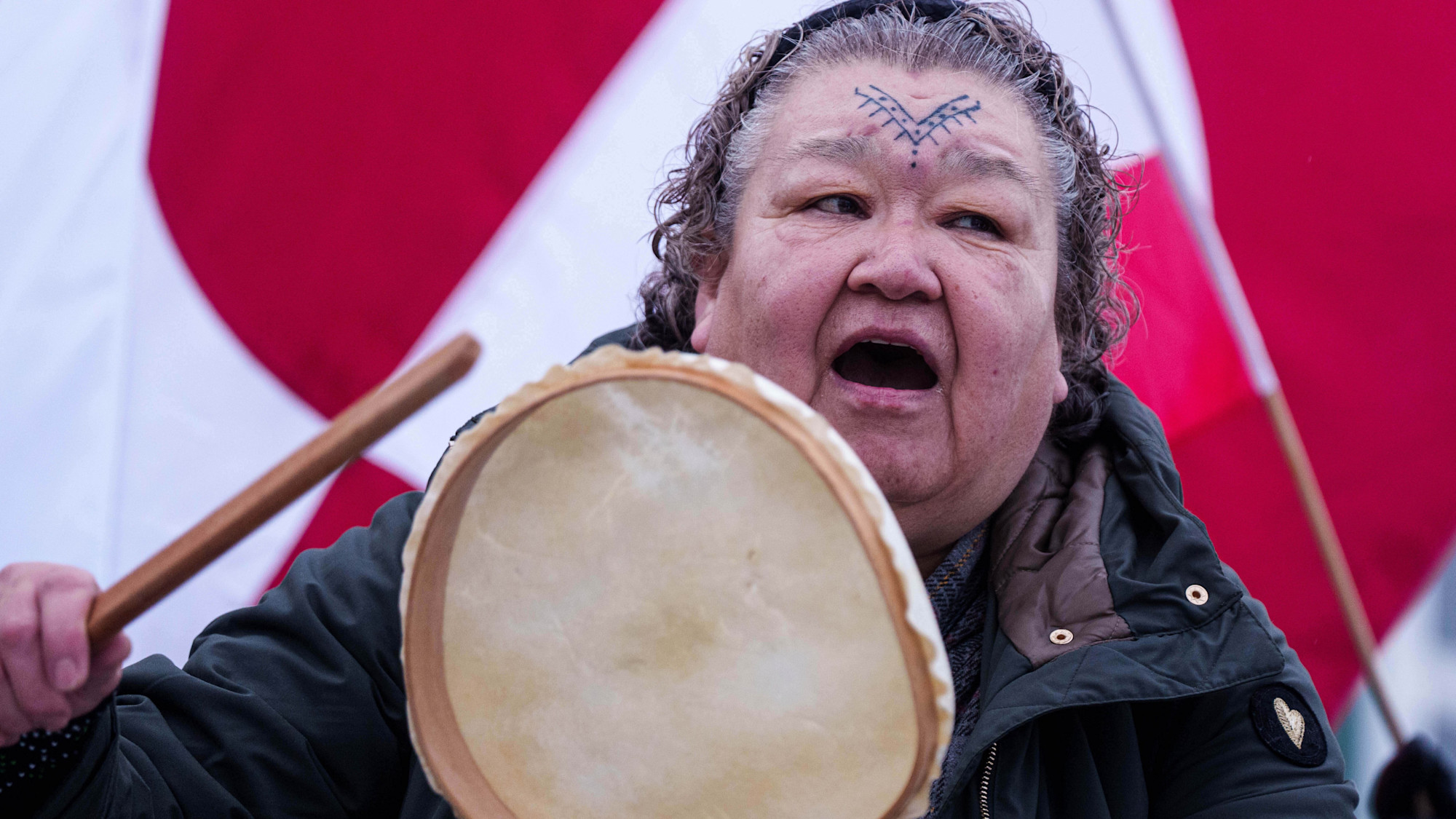
An Inuit woman sings a national song during a protest against Trump's policy towards Greenland on Saturday. Credit: AP

Trump's announcement on Saturday was met with condemnation by Sir Keir Starmer and fellow European leaders, who criticised the US president's plan, with Sweden's prime minister saying they would not be "blackmailed".

Responding to the tariffs, the joint statement reads: “As members of Nato, we are committed to strengthening Arctic security as a shared transatlantic interest. The pre-coordinated Danish exercise Arctic Endurance, conducted with Allies, responds to this necessity. It poses no threat to anyone.

“We stand in full solidarity with the Kingdom of Denmark and the people of Greenland. Building on the process begun last week, we stand ready to engage in a dialogue based on the principles of sovereignty and territorial integrity that we stand firmly behind.

“Tariff threats undermine transatlantic relations and risk a dangerous downward spiral. We will continue to stand united and coordinated in our response. We are committed to upholding our sovereignty.”

Trump's intended levies would apply to Denmark, Norway, Sweden, France, Germany, the Netherlands and Finland as well as the UK after they had “journeyed to Greenland, for purposes unknown”, Trump said.

On Saturday, Starmer said Trump’s decision was “completely wrong” adding that he would be “pursuing this directly” with the US administration.

Sweden’s Prime Minister Ulf Kristersson said “we will not let ourselves be blackmailed”, while French President Emmanuel Macron said he would hold talks with European partners and would not bow to “intimidation”.

Finland’s Prime Minister Petteri Orpo said tariffs would be in “no one’s interest”, with Norway’s Prime Minister Jonas Gahr Store writing on social media: “Threats have no place among allies.”

Speaking on Sunday, Culture Secretary Lisa Nandy said the UK’s position on Greenland is “non-negotiable”.

She echoed Starmer's statement, telling Sky News’ Sunday Morning With Trevor Phillips: “We believe that this decision on tariffs is completely wrong.”

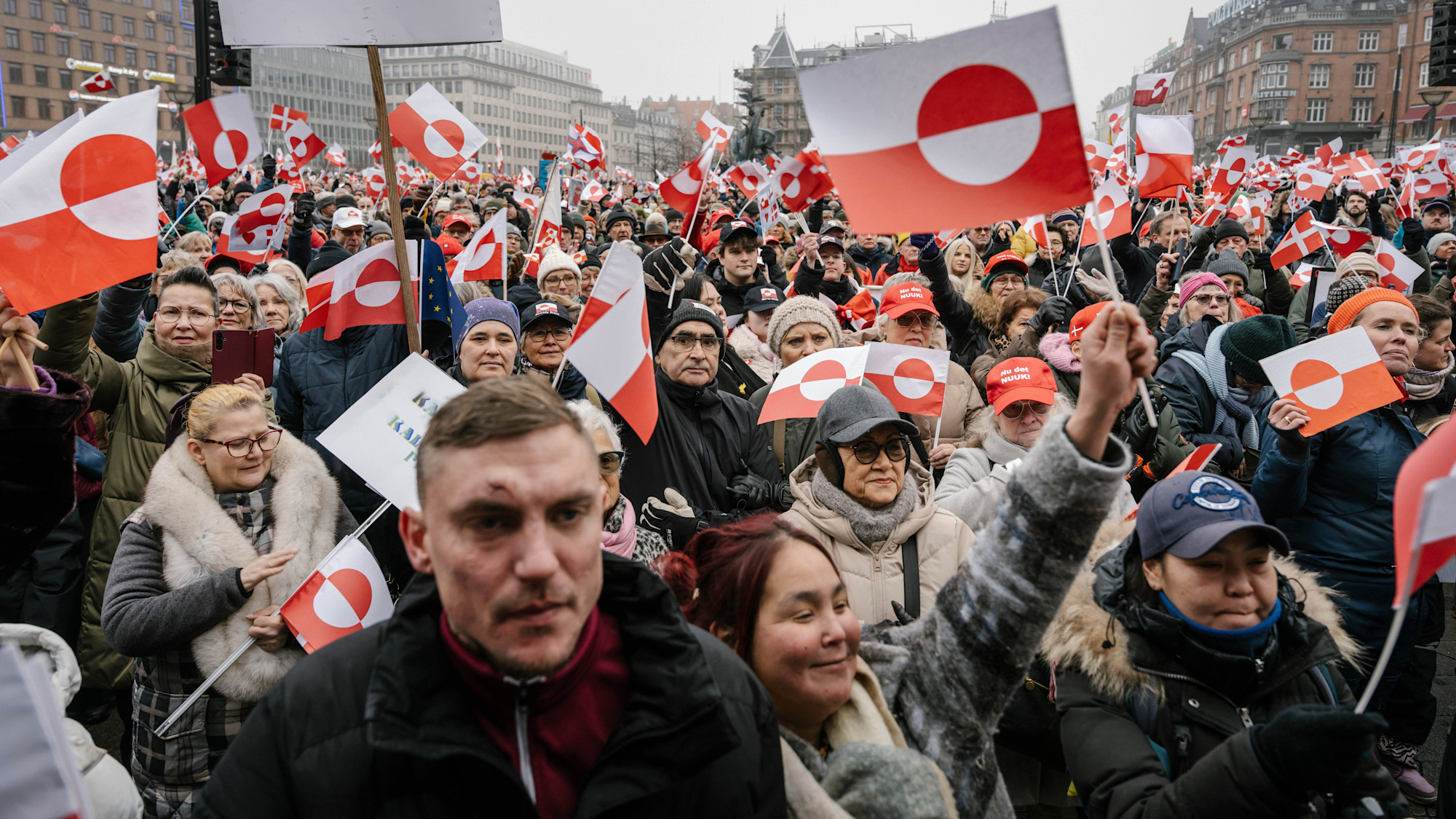
People march during a pro- Greenlanders demonstration, in Copenhagen, Denmark, Saturday. Credit: AP 

Earlier this week, the UK confirmed it had sent a military officer to Greenland as Denmark stepped up its military presence in the Arctic and High North.

Downing Street said they were sent at Denmark’s request to join a reconnaissance group ahead of a planned Arctic endurance exercise, but denied it amounted to a “deployment”.

In a post on Truth Social on Saturday, Trump said: “These Countries, who are playing this very dangerous game, have put a level of risk in play that is not tenable or sustainable.

“Therefore, it is imperative that, in order to protect Global Peace and Security, strong measures be taken so that this potentially perilous situation end quickly, and without question.”

Trump said the US was “immediately open to negotiation with Denmark and/or any of these Countries that have put so much at risk, despite all that we have done for them, including maximum protection, over so many decades”.

He said it was “time for Denmark to give back”, adding: “China and Russia want Greenland, and there is not a thing that Denmark can do about it.”

The British prime minister said: “Our position on Greenland is very clear – it is part of the Kingdom of Denmark and its future is a matter for the Greenlanders and the Danes.

“We have also made clear that Arctic security matters for the whole of Nato and allies should all do more together to address the threat from Russia across different parts of the Arctic.

“Applying tariffs on allies for pursuing the collective security of Nato allies is completely wrong. We will of course be pursuing this directly with the US administration.”

EU leaders said the Danish exercise “poses no threat to anyone” and warned tariffs would risk a “dangerous downward spiral” in transatlantic relations.

European Commission President Ursula von der Leyen and European Council President Antonio Costa said: “The EU stands in full solidarity with Denmark and the people of Greenland. Dialogue remains essential, and we are committed to building on the process begun already last week between the Kingdom of Denmark and the US.

“Tariffs would undermine transatlantic relations and risk a dangerous downward spiral. Europe will remain united, coordinated, and committed to upholding its sovereignty.”

The EU’s foreign policy chief said tariffs could make the US and EU poorer and boost China and Russia.

Former Estonian prime minister Kaja Kallas said on social media: “China and Russia must be having a field day. They are the ones who benefit from divisions among Allies.

Trump’s move prompted criticism across the board from UK politicians who fear for their impact on 

Earlier this week, the UK confirmed it had sent a military officer to Greenland as Denmark stepped up its military presence in the Arctic and High North.

Downing Street said they were sent at Denmark’s request to join a reconnaissance group ahead of a planned Arctic endurance exercise, but denied it amounted to a “deployment”.

In a post on Truth Social on Saturday, Trump said: “These Countries, who are playing this very dangerous game, have put a level of risk in play that is not tenable or sustainable.

“Therefore, it is imperative that, in order to protect Global Peace and Security, strong measures be taken so that this potentially perilous situation end quickly, and without question.”

Trump said the US was “immediately open to negotiation with Denmark and/or any of these Countries that have put so much at risk, despite all that we have done for them, including maximum protection, over so many decades”.

He said it was “time for Denmark to give back”, adding: “China and Russia want Greenland, and there is not a thing that Denmark can do about it.”

The British prime minister said: “Our position on Greenland is very clear – it is part of the Kingdom of Denmark and its future is a matter for the Greenlanders and the Danes.

“We have also made clear that Arctic security matters for the whole of Nato and allies should all do more together to address the threat from Russia across different parts of the Arctic.

“Applying tariffs on allies for pursuing the collective security of Nato allies is completely wrong. We will of course be pursuing this directly with the US administration.”

EU leaders said the Danish exercise “poses no threat to anyone” and warned tariffs would risk a “dangerous downward spiral” in transatlantic relations.

European Commission President Ursula von der Leyen and European Council President Antonio Costa said: “The EU stands in full solidarity with Denmark and the people of Greenland. Dialogue remains essential, and we are committed to building on the process begun already last week between the Kingdom of Denmark and the US.

“Tariffs would undermine transatlantic relations and risk a dangerous downward spiral. Europe will remain united, coordinated, and committed to upholding its sovereignty.”

The EU’s foreign policy chief said tariffs could make the US and EU poorer and boost China and Russia.

Former Estonian prime minister Kaja Kallas said on social media: “China and Russia must be having a field day. They are the ones who benefit from divisions among Allies.

Trump’s move prompted criticism across the board from UK politicians who fear for their impact on the economy.

Tory leader Kemi Badenoch said Trump was “completely wrong” to impose tariffs over Greenland, adding they would be a “burden for businesses across our country”.

Reform leader Nigel Farage said the tariffs would “hurt” the UK, and Liberal Democrat leader Sir Ed Davey said Trump was “punishing” the UK.

Hundreds of people in Greenland’s capital Nuuk attended a rally on Saturday in support of self-governance.

Thousands also took part in rallies across Denmark on Saturday opposing any US takeover of Greenland.

Since the US began openly discussing the annexation of Greenland at the start of 2026, the UK has stepped up discussions on Arctic security with Starmer raising the issue in calls with Trump, the Danish Prime Minister Mette Frederiksen and Nato secretary-general Mark Rutte.

The British Chambers of Commerce said Trump’s proposed tariffs on Greenland will have a “greater impact” on UK exports if they are stacked on existing tariffs.

William Bain, its head of trade policy, told the Press Association: “If there’s stacking of these duties and that is how the US government intends to implement this statement tonight, then these tariffs would have a greater impact upon UK goods exports to the US than even the Rose Garden statement of April 2 had last year.”

Saturday, 17 January 2026

Ondo State Anti-Land Grabbing Taskforce Holds First Meeting of the Year, Vows Strong Action Against Land Grabbers in 2026, Declares Zero Tolerance


The Ondo State Anti-Land Grabbing Taskforce has issued a stern warning to land grabbers to desist from their illegal activities or face the full weight of the law, as it reiterated its commitment to safeguarding property owners across the state.

The warning was issued during the Taskforce’s first meeting of the year, held at its office in Oke-Eda, Akure, where renewed strategies were outlined to curb land-related crimes in the state and strengthen enforcement efforts in 2026.

The Chairman of the Taskforce and the Honourable Attorney-General and Commissioner for Justice, Dr. Olukayode Ajulo, SAN, OON, in his address, declared that 2026 would be a decisive and difficult year for land grabbers in Ondo State. He warned that anyone who violates the Ondo State Properties Protection and Its Documentation Law, 2024 would face the full weight of the law, stressing that the successes recorded in 2025 were only the beginning, as sufficient time had been given for offenders to desist from the unlawful acts.

According to the Chairman, “The grace period has expired with 2025. Any land grabber operating in Ondo State should know that this year will be different. Recall that I earlier stated that we have compiled the names of individuals our investigations have confirmed to be deeply involved in land grabbing, turning themselves into veterans of illegality. In 2026, we are going all out against them, and the law will be enforced strictly without compromise.”

He further warned that the Taskforce would no longer tolerate illegal land sales, multiple sales of land by owning families, intimidation of lawful owners, or any form of forceful land acquisition, adding that offenders would be arrested, prosecuted, and made to face the consequences of their actions.

The Chairman also applauded the Governor for allaying long-standing fears associated with land-related fraud through the enactment of the Ondo State Properties Protection and Its Documentation Law, 2024, which criminalises land grabbing and related offences. He stressed the Governor’s continued support in providing the necessary resources to ensure the effective operation of the Taskforce.

“In my capacity and on behalf of the Committee, I sincerely appreciate Mr Governor for his commitment to this initiative. Through the enactment of this law, he has once again demonstrated his unwavering commitment to the well-being of the people of the State and the protection of their lawful property rights. With this law in place and the full backing of government, investors can now operate without fear, property owners can be assured of protection, and the era of impunity for land grabbers in Ondo State is effectively coming to an end." The Chairman said.

The committee equally commended the Governor for his sustained commitment to the anti-land grabbing initiative, particularly the approval of crucial operational resources for the Taskforce, noting that such support would further enhance effectiveness and ensure prompt response to complaints across the State.

Members present at the meeting included the Commissioner for Works, Land and Infrastructure, Engr. Olawoye Abiola, former House of Representatives member representing Ondo East/West Federal Constituency, Hon. Iranola Akinlaja, Pro-Chancellor and Chairman of the Governing Council of Adekunle Ajasin University, Akungba-Akoko (AAUA), Dr Tunji Abayomi, the Surveyor-General of Ondo State, Barr. Banjo Ayenakin; Surveyor Idowu Abiodun; ACP Olawoye Ezekiel, who represented the Commissioner of Police; and Officer Obaade, who represented the Amotekun Commander, among others.

ALAAFIN : The Imperial Throne of Yoruba Political Power (1)


ALAAFIN : The Imperial Throne of Yoruba Political Power  (1)

"Rewriting history is dangerous. Nobody can deny that the collective sweat of the Yorùbá people is a shared responsibility of the people irrespective of where they are from, but central in such reality is the Alaafin, who would always make himself available for his people. As such, he is expected to call  the people to order when he notices things are not moving. Nobody dares to undermine the authority of the Alaafin among the Yorùbá people. For that reason, the new Alaafin should immediately take the authority of his office to see to the installation of the proper virtues on the thrones of Yorùbá kings. In essence, the Alaafin can make other chiefs accountable for their people and the Yorùbá populace generally by making them take charge of what is expected"...... 
 Renowned Historian, Professor Toyin Falola. 

By  BODE  DUROJAIYE. 

Falsehood cannot thrive over truthfulness in the long term because it is fundamentally unsustainable, requiring constant maintenance and additional deception to survive, whereas truth is anchored in reality and remains consistent.

 While falsehood may offer temporary comfort or gain, it ultimately collapses under the weight of evidence, time, and its own internal contradictions.

There are a plethora of factors known to influence a decision. This might include money, social status, personal biases, and gullibility.

Unfortunately, none of those factors directly equate to sincerity. They can, however, influence someone’s perspective.

Truth has a quiet way of revealing itself. No matter how carefully lies are hidden or how long they are protected, they cannot last forever. Deception may delay reality, but it never erases it.

In the end, honesty stands firm while falsehood fades. Truth does not need force or defense—it simply waits for the right moment to surface. And when it does, it brings clarity, accountability, and the chance to move forward with integrity.

However,  the Alaafin, "Owner of the Palace",  symbolizes the Imperial Glory of the Yoruba Empire.

The institution remains a Custodian of Yoruba culture, politics, and tradition.
It serves as a reminder of the Yoruba’s sophisticated pre- colonial political system, one that balanced power with accountability.

The Alaafin is not merely a king but the embodiment of Yoruba Imperial Heritage and political power. From the days of the mighty Oyo cavalry till today,  the revered throne has stood as a beacon of Yoruba identity.

 Today, it continues as one of the most respected monarchies in Africa, uniting tradition with modern cultural pride.

The Alaafin also  remains a Premier symbol of Yoruba heritage due to his role as the Paramount Custodian of the traditions, history, and, historically, the Political Power of the Oyo Empire.

 As the descendant of Oranmiyan, grandson of Oduduwa, the Alaafin embodies the continuity of a legacy that once functioned as the military and administrative stronghold of the Yoruba people. 

What is more, the Alaafin serves as the Guardian of Yoruba Cultural Identity and is considered a unifying force for the Yoruba people.

With the title meaning "owner of the palace," the Alaafin is seen as a central authority and is considered Ekeji Orisha, a direct spiritual representative on earth, initiated into mysteries like Ifa and Sango.

Ancient protocols are still observed at the Alaafin’s Palace, which symbolizes Yoruba royalty and governance and reflects a deep, unbroken traditional authority.

In contemporary times, the Alaafin is viewed as a "bridge between the past and the future," continuing to uphold the dignity and legacy of the Oyo kingdom. 

President of the Federal Republic of Nigeria, Asiwaju Bola Ahmed Tinubu , during the colourful coronation ceremony of the Alaafin, His Imperial Majesty, Iku Baba Yeye, Oba Engineer Abimbola Akeem Owoade 1,  described the Alaafin stool "" as a Symbol of Cultural pride, unity, and the enduring legacy of one of Africa’s most powerful empires"".

Tinubu said: “Kabiyesi, your ascension to this revered throne comes at a critical time in our nation’s history. Nigeria is navigating complex challenges, and traditional institutions like the Alaafin’s stool remain ""vital in fostering peace, promoting cultural identity, and supporting governance"". 

 President Tinubu affirmed his commitment to preserving our cultural heritage by supporting initiatives that promote our rich traditions and ensure that Nigeria’s diverse cultures remain a source of strength. 

According to the President,  " to the great people of Oyo, I urge you to rally behind your new Alaafin, support his vision, and uphold the values of peace, tolerance, and development. Let us remember the words of the late Alaafin, Oba Lamidi Adeyemi III: “A kingdom thrives when its people are united in purpose.

" For the Alaafin, you are on the threshold of history as successor to Oba Adeyemi III who was one of the most influential and longest-reigning monarchs in Yoruba history. His reign was a period of cultural renaissance, political influence, and socio-economic development for Oyo Town, Oyo State, and the Yoruba nation at large"..

Also, a renowned  Yoruba Historian, Professor Toyin Falola has this to say, ""rewriting history is dangerous. Nobody can deny that the collective sweat of the Yorùbá people is a shared responsibility of the people irrespective of where they are from, but central in such reality is the Alaafin, who would always make himself available for his people".

 He went further, " as such, he is expected to call  the people to order when he notices things are not moving. Nobody dares to undermine the authority of the Alaafin among the Yorùbá people. For that reason, the new Alaafin should immediately take the authority of his office to see to the installation of the proper virtues on the thrones of Yorùbá kings.

" In essence, the Alaafin can make other chiefs accountable for their people and the Yorùbá populace generally by making them take charge of what is expected"".

The position of Oba, Prof. Falola pointed out, is an exclusive toil of selfless and relentless figures who were deeply rooted in indigenous power, and it should not be usurped by" " people masking their desire to please their expansionist allies.".

 Alaafin Owoade quite understands the need for contemporary leadership that is ethical and people-oriented. 

He is also aware that  socio-cultural import of Yorùbá history is that anyone sitting on that stool would inherit such character of leadership because they are meant to repel danger away from the Yorùbá world, hence he is doing this by striving hard  to uphold  leadership responsibilities and initiatives. 

To be continued......

Send in Your Report or Opinion to NUJ Europe

Name

Email *

Message *

mixed ads